
Isaac Asimov and the Zeroth Law of Robotics
Isaac Asimov, while not a man of God, was a man of logic.
After being inspired by two brothers who wrote a famous robot story in 1939, Asimov began his own series. He rejected the idea that sentient robots, essentially what we now call AI, would turn on their masters. He believed that humanity would never create artificial intelligence without safeguards.
RELATED: Could a Robot Become President of the United States?
So came the famous “Three Laws of Robotics” that were stamped into each robot’s positronic brain. However, as the stories progressed, and robots became fictional caretakers of fictional civilizations, he added another law – a zeroth law. This new imprint upon the robotic brain pertained to humanity as a whole, preventing an AI from destroying us all.

“The Bicentennial Man” is one of Asimov’s most enduring robot stories. (Scan by Lynn Woolley for WBDaily)
Origins of Asimov’s Three Laws.
The laws gradually crept into Asimov’s robot stories until, after consultation with the great editor of Astounding Science Fiction, John W. Campbell, they settled into the famous triad that we have now:
The Three Laws, [from the fictional] “Handbook of Robotics, 56th Edition, 2058 A.D.”, are as follows:
A robot may not injure a human being or, through inaction, allow a human being to come to harm.
A robot must obey the orders given it by human beings except where such orders would conflict with the First Law.
A robot must protect its own existence as long as such protection does not conflict with the First or Second Law.
As we say, Asimov was logical, and believed that the only way to safely create robotic intelligence was to imprint such laws within their systems, known then as “positronic brains.” Amazingly, when the Three Laws came into conflict with each other or with some fictional plot twist, the robots’ reactions made for interesting and exciting storylines.
RELATED: Why I Don’t Use the F-Word in My Writing
To be entertaining, robots in science fiction had to be human.
That was a given. No author would write a story about a machine that chugged along every day doing the same thing over and over. But then, no other machine moved like a human, and worked like a human. So, in the stories, they also acted like a human, exhibiting human emotions.
AUDIO: Random Samplings of a Logical Mind
A great example of that is the backstory of Adam Link, a humaniform robot that starred in a story entitled “I, Robot,” in 1939, written by Eando Binder. “Eando” was really two brothers who combined the first letters of their first names – Earl and Otto – to form the nom de plume – E and O Binder. Otto is also known for scripting Captain Marvel comics for Fawcett during comics’ Golden Age, and for being a co-creator of Supergirl.

Amazing Stories, January, 1939, featuring the first Adam Link story, I, Robot.”
In “I, Robot,” the Binders presented a story of false allegations against the eponymous robot. Here’s the plotline from Wikipedia:
The story is about a robot’s confession. Some weeks earlier, its builder, Dr. Charles Link, built it in the basement. Link teaches his robot to walk, talk and behave civilly. Link’s housekeeper sees the robot just enough to be horrified by it, but his dog is totally loyal to it. The robot is fully educated in a few weeks, Link then names it Adam Link, and it professes a desire to serve any human master who will have it. Soon afterwards, a heavy object falls on Dr. Link by accident and kills him. His housekeeper instantly assumes that the robot has murdered Dr. Link, and calls in armed men to hunt it down and destroy it. They do not succeed; in fact, they provoke the robot to retaliate, both by refusing to listen to it and by accidentally killing Dr. Link’s dog. Back at the house, the robot finds a copy of Frankenstein, which Dr. Link had carefully hidden from the robot, and finally somewhat understands the prejudice against it. In the end the robot decides that it simply is not worth killing several people just to get a hearing, writes its confession, and prepares to turn itself off.
Of course, that’s a lot of artificial intelligence and human emotion, but without it, there’s no story.
Adam Link was popular enough that Otto Binder adapted several stories for the black-and-white horror magazine Creepy, with art by Joe Orlando. And, there was a sixties television version of the story with a plot change at the end. Again, Wikipedia:
“I, Robot” plus “The Trial of Adam Link, Robot” were adapted for an episode of the 1960s science fiction anthology series The Outer Limits in 1964, starring Leonard Nimoy as a journalist and Howard Da Silva as the robot’s lawyer, with Read Morgan as Adam Link. In this version, (I, Robot (1964 The Outer Limits)), Robot Adam is caught and put on trial. While the death of Dr. Link is shown in flashback as an accident, in the end Adam is found guilty. On the way to be transported to his execution, a girl runs out into traffic and Adam rushes to save her from the oncoming vehicle. He is broken into pieces, “cheating the executioner”.
Video: “I, Robot” from The Outer Limits, original series
The episode was remade, in color this time, in a modern version of the same show:
For the 1990s revival of the Outer Limits series, the story was again reprised with Leonard Nimoy as the robot’s lawyer and John Novak as the voice of the robot. In this version, the robot accidentally kills his creator when Dr. Link attempts to convert him into a military killing machine by destroying his more human qualities. Similar to the 1964 episode, Adam is put on trial, and in the end, he is destroyed by a speeding vehicle while saving a human life (this time, the District Attorney who prosecuted him and wanted him dismantled).
Now you may be thinking, but wasn’t I, Robot the title of Asimov’s first robot collection? It was, and the Good Doctor protested, saying that the title was stolen from the Binders. The publishers prevailed, and the title became associated with Asimov, and even spawned a movie of that same name starting Will Smith.
It was in Asimov’s robot stories that the Three Laws became transcendent.
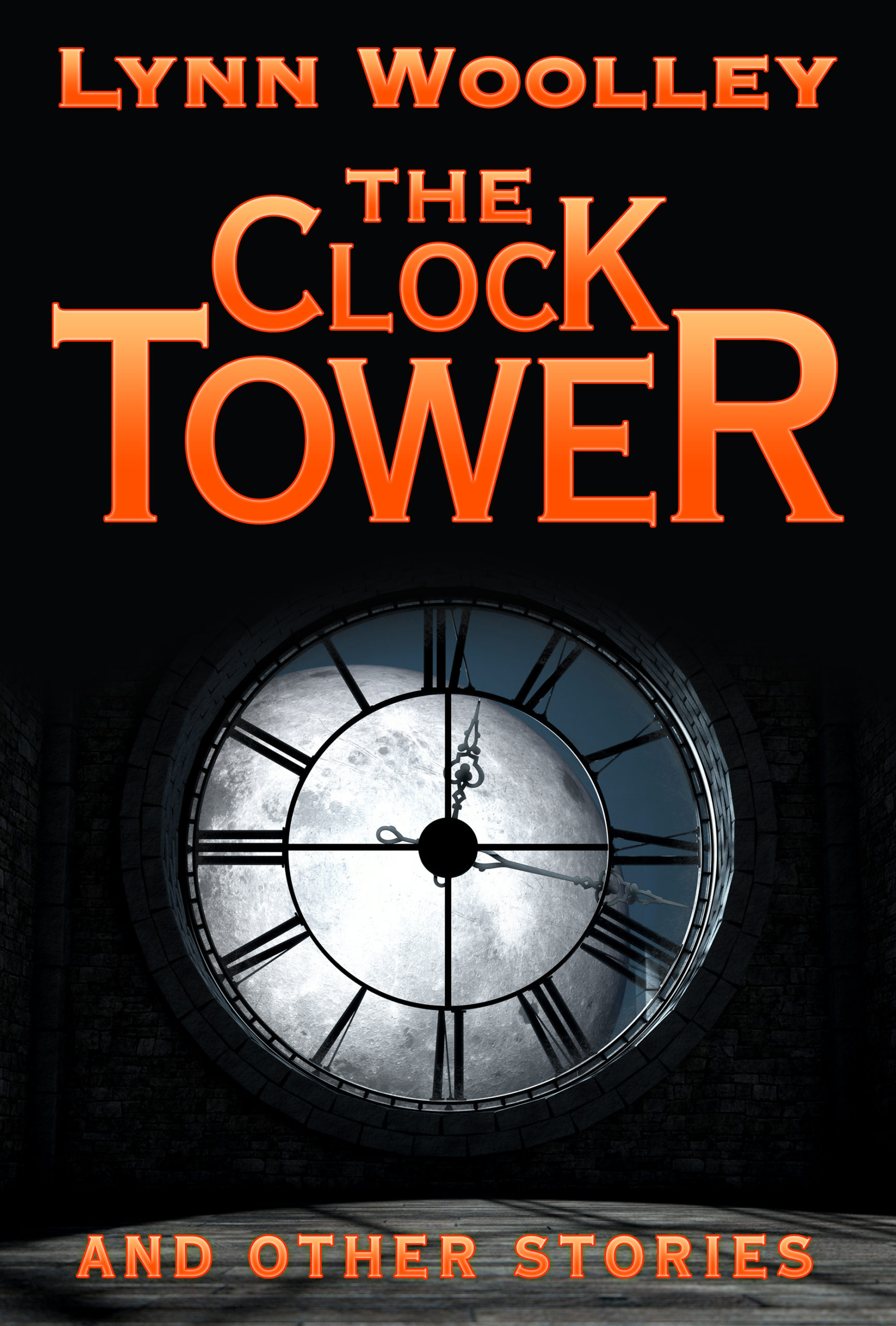
It was just assumed that Asimov’s laws were so logical that no AI (to use our modern term) would be created without them. Of course, some robots went rogue such as Hal in “2001: A Space Odyessey,” and even “Otto” in my own story “Flagship Station” that was published in The Clock Tower and Other Stories.

Splash page from the first issue of “Magnus, Robot Fighter,” mentions the First Law. Russ Manning art. Scan of original artwork from Heritage Auctions.
In Gold Key Comics’ series, Magnus, Robot Fighter, by the great Russ Manning, the first page of the first story mentioned one of Asimov’s laws. By this time, the laws were universal.
What about the fourth law? The one Asimov called the “Zeroth Law?”
This fourth law brings us full circle to where we are today. Stories about families owning robots and coming into compliance or non-compliance with the Three Laws were fine. But what about robots’ interaction with civilizations? Asimov felt the need to create a fourth law, and later added it to the original three.
He must have felt that it was the most important law of all. He did not name it the Fourth Law; he named it the Zeroth Law:
A robot may not harm humanity, or, by inaction, allow humanity to come to harm.
He knew even then that a “positronic” brain could get out of hand – and possibly go where no AI had gone before. And isn’t that where we are right now? The United States and China are in a battle to see which nation can control AI – because future wars will be fought that way.
There’s also the issue – that bothers me almost as much – of AI taking over the creative arts. I did not use AI to write this column, but I could have. AI is now voicing radio and TV commercials, creating fake photographs (even nude or compromising pictures known as deepfakes) and writing music and even creating finished songs that play on the radio. Personally, I never want to read a story or novel, or hear a song that was written by AI. That ought to be banned.
RELATED: My amazing Star Wars Encounter with Leonard Nimoy
Unlike in Asimov’s fictional universe, we have no safeguards. We are now in the process of trying to figure out what to do. China is obviously not as concerned, and is likely hoping the United Sates will stop building data centers. We’re in an AI conundrum. Again from Wikipedia, Asimov saw it coming:
I have my answer ready whenever someone asks me if I think that my Three Laws of Robotics will actually be used to govern the behavior of robots, once they become versatile and flexible enough to be able to choose among different courses of behavior. My answer is, “Yes, the Three Laws are the only way in which rational human beings can deal with robots—or with anything else.” —But when I say that, I always remember (sadly) that human beings are not always rational.
Asimov passed away in 1992. I remember where I was and what I was doing. At that time, neither he nor I could imagine how much of his fictional world would come true in less than 35 years.
All this reminds me of a joke that I’ll paraphrase:
In the joke, a group of computer scientists is arguing about whether there really is a God. Some of them believed there is and others disagreed. To settle the dispute, they decided to create the world’s most powerful AI, and allow it to decide the answer. When they had finished work on the AI, they were finally ready to ask the question, and so they did. “Is there a God?” they asked. The AI replied: “There is now.”
 Lynn Woolley is a Texas-based author, broadcaster, and songwriter. Follow his podcast at https://www.PlanetLogic.us. Check out his author’s page at https://www.Amazon.com/author/lynnwoolley.
Order books direct from Lynn at https://PlanetLogicPress.Square.Site. Email Lynn at lwoolley9189@gmail.com.
You can read about the AI “Otto” in the story “Flagship Station.”